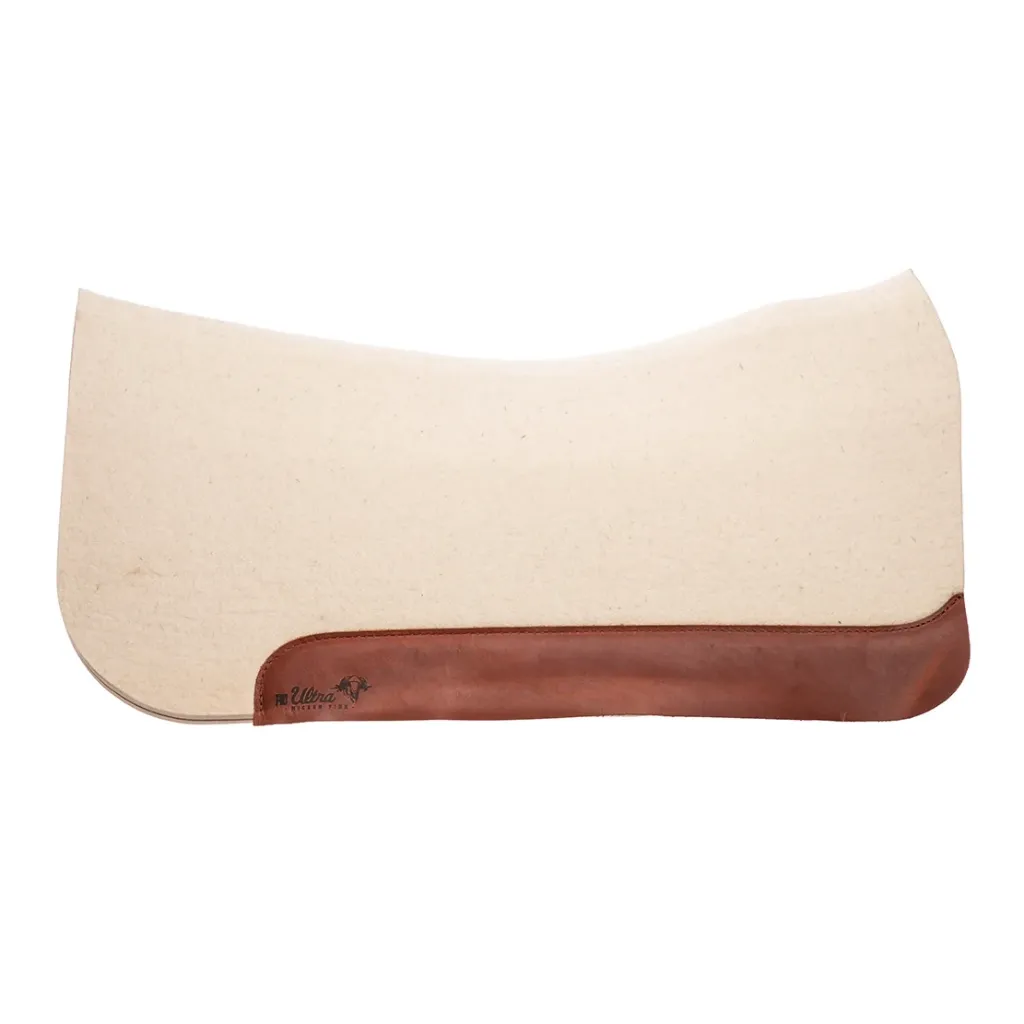
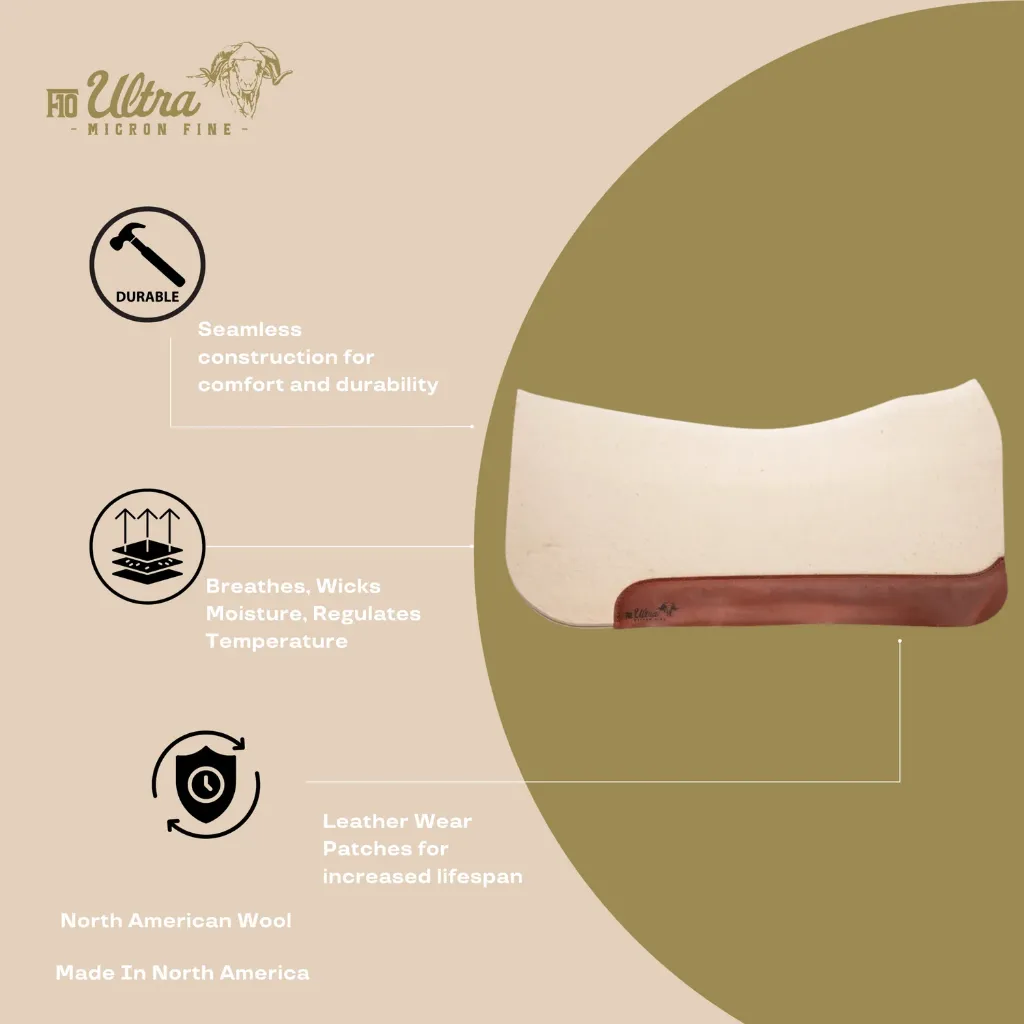
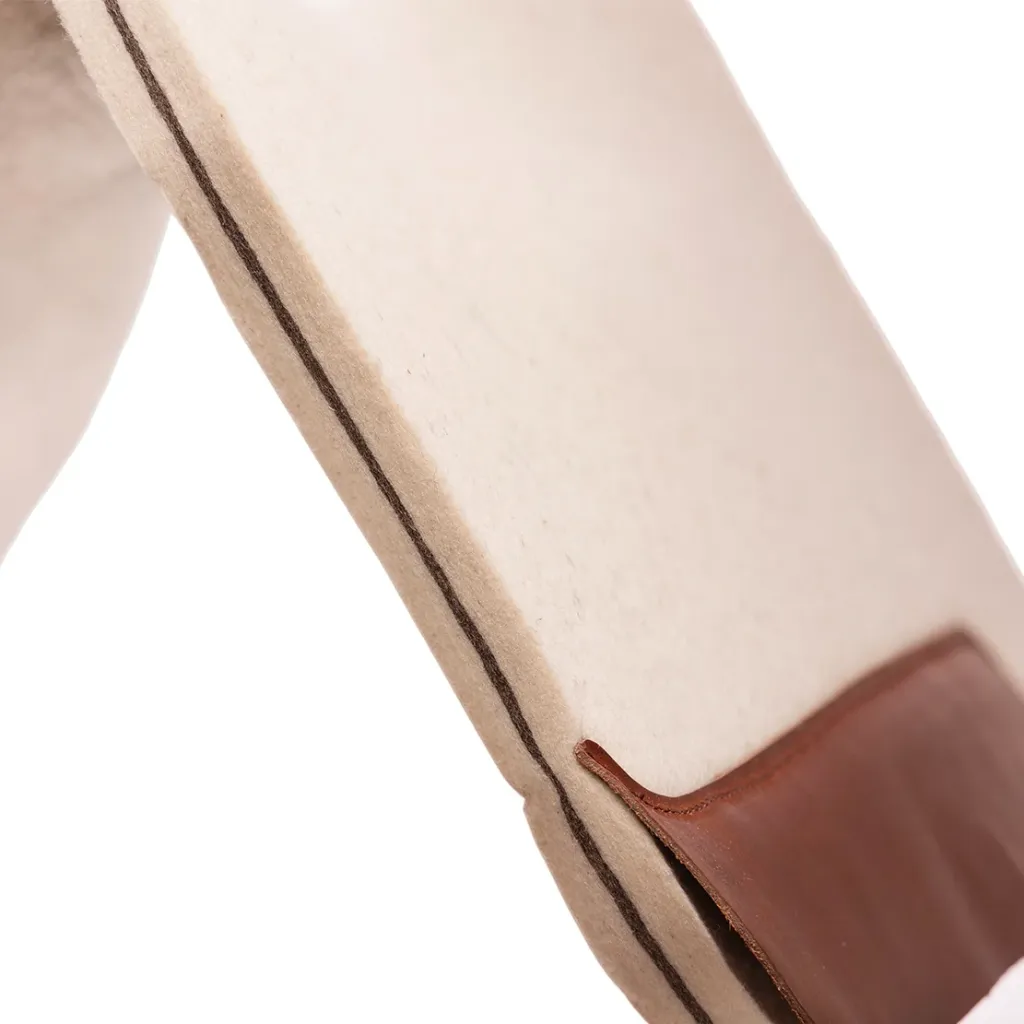
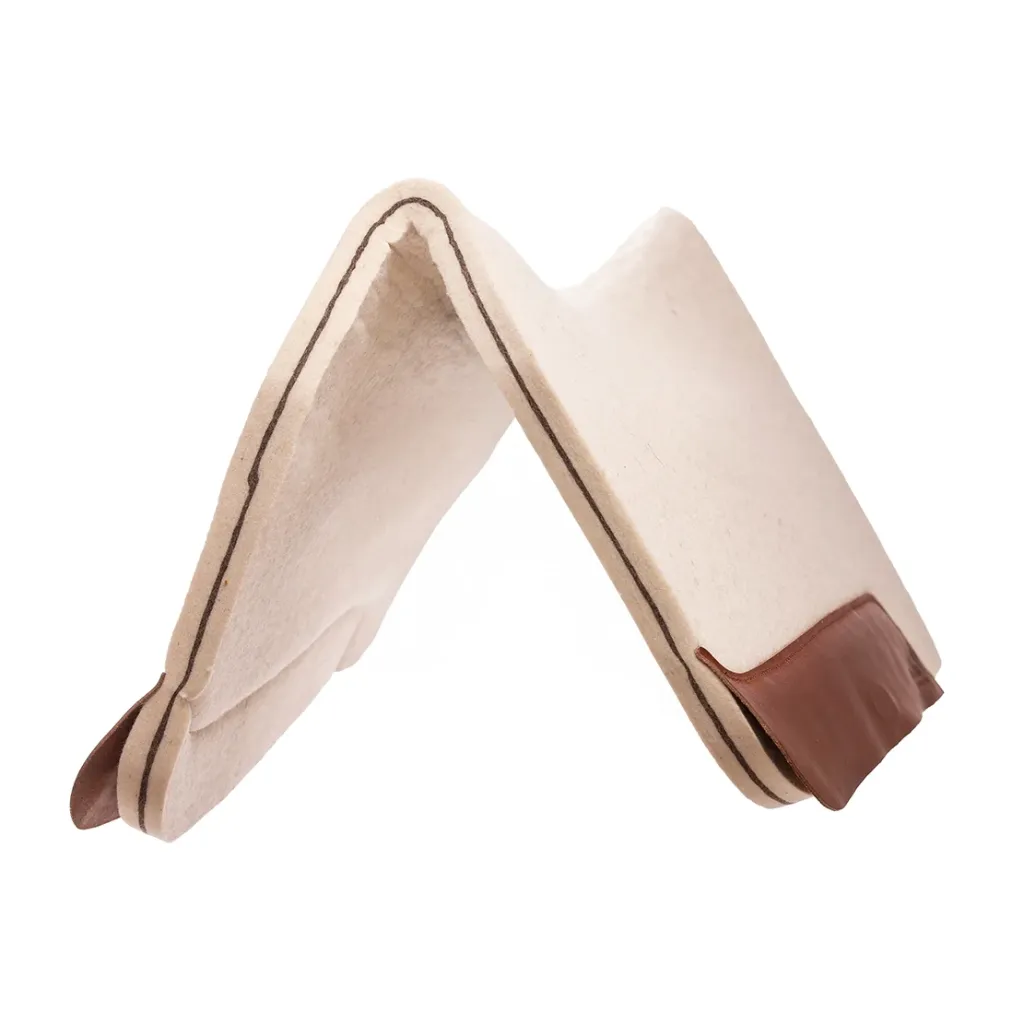
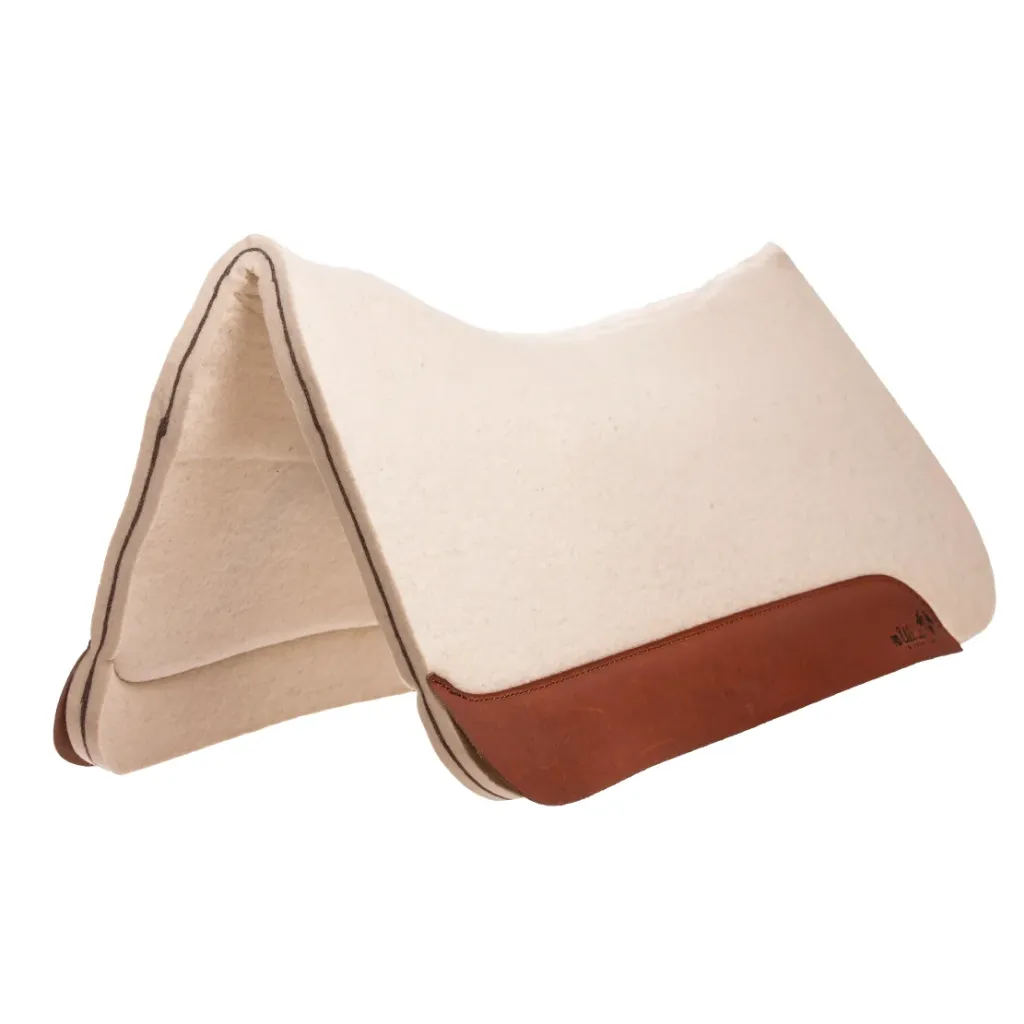
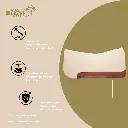
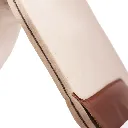
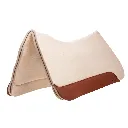
Built with 100% ultra-fine Canadian Rambouillet wool and manufactured in Canada, this saddle pad is designed for riders who expect comfort, durability, and performance from every ride.
The premium wool felt provides excellent moisture wicking, tensile strength, and compression control, helping keep your horse comfortable while maintaining the pad’s structure over time.
By using some of the highest quality wool available, our felt achieves the F10 standard for performance and durability. Combined with Brand Felt Unity™ Pad Technology, this pad delivers a level of comfort, support, and longevity that you and your horse can feel.
Key Features
- Made with 100% ultra-fine Canadian Rambouillet wool
- Manufactured in Canada
- Excellent moisture wicking to help manage sweat
- Built for compression control and consistent support
- Features Brand Felt Unity™ Pad Technology
- Designed for superior horse comfort and rider confidence
UltraTuff VS F10 Ultra
So what's the difference between the F10 line and the Ultratuff line?
Functionally, nothing. They are both made using the highest quality Rambouillet wool.
Saddle Pad and Pad Liner Care Instructions
Our saddle pads are built for lasting comfort, reliable fit, and consistent performance ride after ride. Proper care helps protect the wool, preserve fit, and maintain the pad’s natural ability to wick moisture and manage pressure.
Our pad liner is designed to help protect your saddle pad during heavy use, shedding season, and everyday riding. It creates a replaceable layer between your horse and the pad, helping reduce hair, dirt, sweat, and buildup on the underside of the saddle pad.
The pad liner is a consumable product. It is designed to be used, cleaned when needed, and replaced over time as it wears, collects buildup, or no longer performs as intended.
Fitting and Cutting the Pad Liner
The pad liner is cut to size by the customer.
To fit the liner, place the pad liner directly on the horse’s back first. Then place your saddle pad on top of the liner in the correct position.
Once the saddle pad is positioned correctly, trim the pad liner so there is approximately 2 inches of extra liner around the full perimeter of the saddle pad. This gives the liner enough coverage to help protect the pad while still allowing it to sit properly under the saddle.
Do not cut the liner smaller than the saddle pad. The liner should extend beyond the edge of the pad so it can catch sweat, hair, and dirt before they reach the pad.
Allow your saddle pad and pad liner to air dry completely after every ride.
Place the saddle pad in a clean, well-ventilated area with the underside exposed to air. Do not leave the pad trapped under a saddle, stacked under other pads, or stored while damp. Wool needs airflow to dry properly.
Remove the liner from the pad after each ride so both pieces can dry separately. Shake off loose dirt, hair, and debris from the liner. During shedding season or heavy use, clean the liner more often to prevent buildup from transferring to the saddle pad.
Once the saddle pad is dry, remove loose hair, dirt, and sweat buildup with a rubber curry comb, soft brush, or vacuum. During shedding season or heavy use, clean the underside more often or use a pad liner.
For routine saddle pad care, brush the pad gently to loosen dirt, hair, and dried sweat. Work from the center outward when possible so debris moves away from the pad instead of deeper into the wool.
For routine pad liner care, brush the liner gently to remove dried sweat, hair, and dirt. You may also rinse the liner with cold or lukewarm water when needed.
Do not use wire brushes, metal curry combs, sharp tools, or anything that can tear, fray, or weaken the saddle pad or liner.
When the saddle pad needs a deeper clean, use cold or lukewarm water and a mild wool-safe soap.
Rinse from the center of the pad toward the outer edges to help move dirt and soap out of the wool. Avoid blasting one spot with high pressure. Keep water moving across the pad and rinse thoroughly until the water runs clean.
When cleaning the pad liner, use cold or lukewarm water and mild soap only if necessary. Rinse thoroughly until the water runs clean.
Do not use hot water. Do not use bleach. Do not use harsh detergents. Do not dry clean.
Soap residue can irritate your horse’s skin, so make sure the saddle pad and liner are fully rinsed before drying.
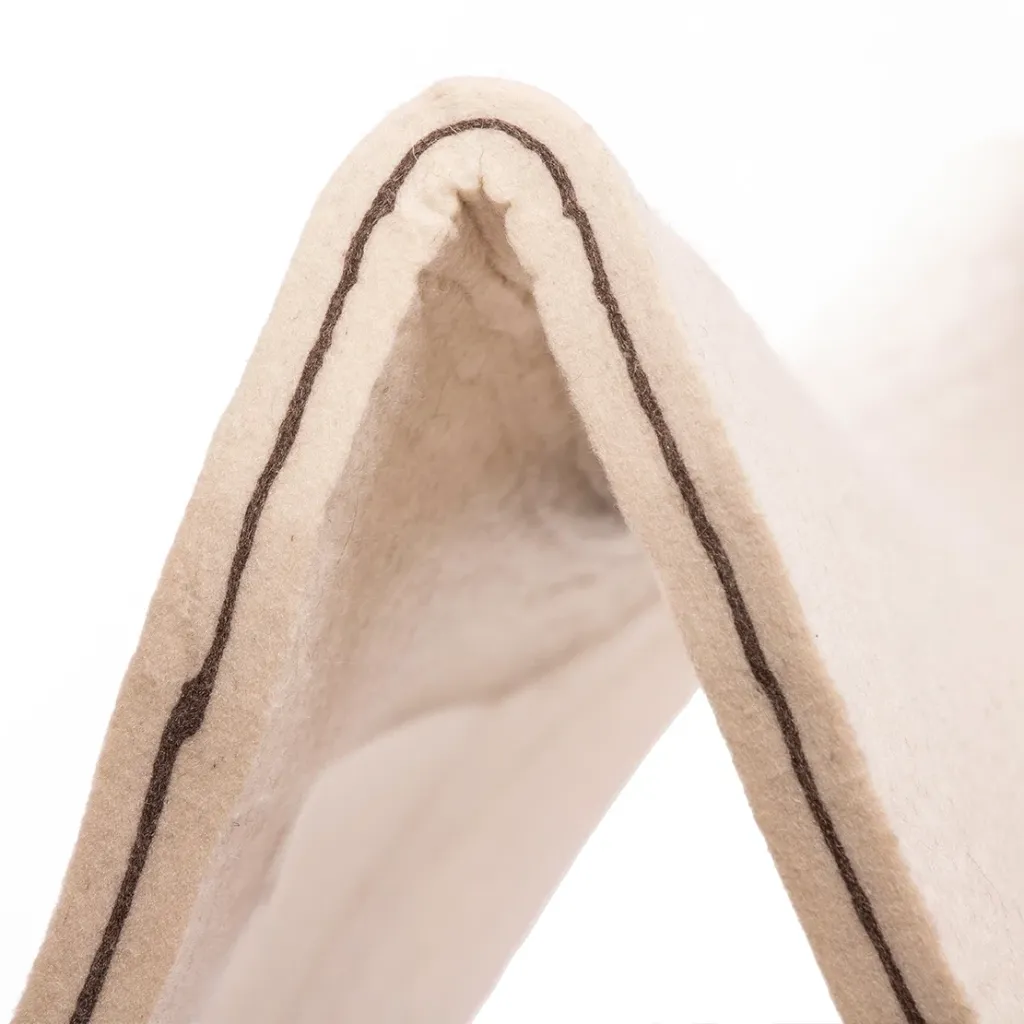
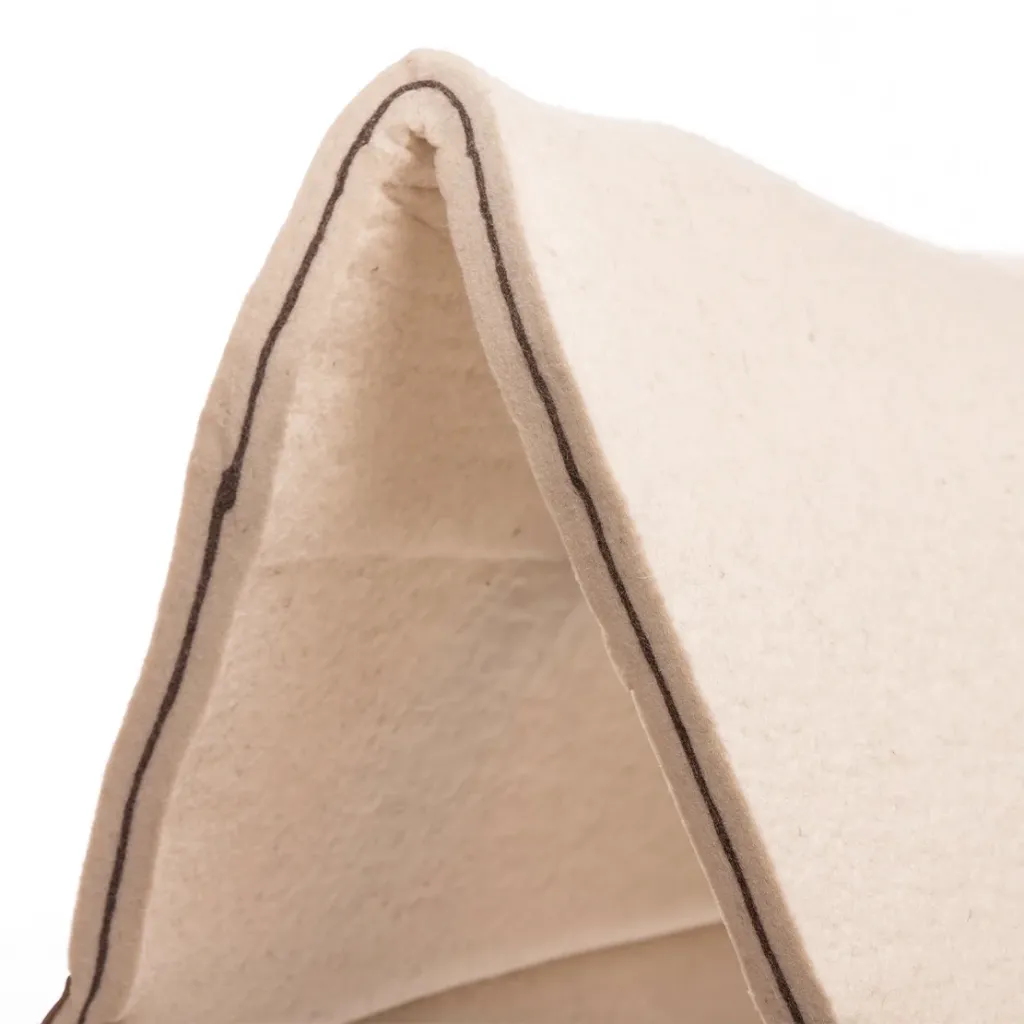
After washing the saddle pad, hang it evenly along the center over a post or fence in a clean, well-ventilated area and allow it to air dry completely. Because the pad is shaped, supporting it along the center helps it maintain its form as it dries.
After rinsing or washing the pad liner, hang it or lay it flat in a clean, well-ventilated area and allow it to air dry completely.
Do not put the saddle pad or liner in a dryer. Do not use heaters, direct high heat, or forced hot air to speed up drying. Heat can damage wool and may cause shrinkage.
Make sure both the saddle pad and liner are fully dry before storing or using them again.
Store your saddle pad and pad liner in a dry, ventilated space.
If you hang the saddle pad for storage, support it evenly along the center instead of hanging it from one side or corner so it can maintain its shape.
Do not store the saddle pad or liner damp. Do not keep heavy items on top of them for long periods. Avoid leaving the saddle pad compressed under a saddle when not in use.
Good airflow helps the wool stay fresh, dry, and ready for the next ride.
When to Replace the Pad Liner
Because the pad liner is a consumable item, it should be replaced when it becomes excessively worn, torn, stretched, packed with buildup, heavily stained, or no longer protects the saddle pad effectively.
Riders using the liner during heavy work, frequent riding, or shedding season may need to replace it more often.
Do not use:
* Hot water
* Bleach
* Harsh detergents
* Wire brushes or sharp scraping tools
* Dryers or direct heat
* Dry cleaning
* Pressure washers
* Long-term storage while damp
* Storing the saddle pad under a saddle or heavy gear
* Hanging the saddle pad from one edge or corner for long periods
* Cutting the liner smaller than the saddle pad
* Using a liner that is torn, packed with buildup, or no longer protecting the pad
For the longest life of your saddle pad, let it dry after each ride, brush it regularly, clean buildup before it hardens, and deep clean only when needed.
Use the pad liner during heavy use and shedding season to help protect the saddle pad from hair, sweat, dirt, and everyday buildup. Replace the liner when it reaches the end of its useful life.
The liner is designed to take the wear so your saddle pad does not have to.
Proper care helps your pad keep doing what it was built to do: provide comfort without compromise, for your horse and for you.