From Hatch to Healthy Flock
By 56 North Ranch Supply
There’s something special about raising chicks. Whether you’re building a backyard egg flock, teaching kids about where food comes from, or adding birds to your homestead, those first few weeks are some of the most important in a chicken’s life. Getting your setup right from the beginning helps chicks grow into healthy, productive birds.
At 56 North Ranch Supply, spring chick season is always one of our favourite times of year. With the right equipment, quality feed, and a little preparation, raising chicks can be simple, rewarding, and a great way to connect with your land and animals.
What You Need Before Your Chicks Arrive
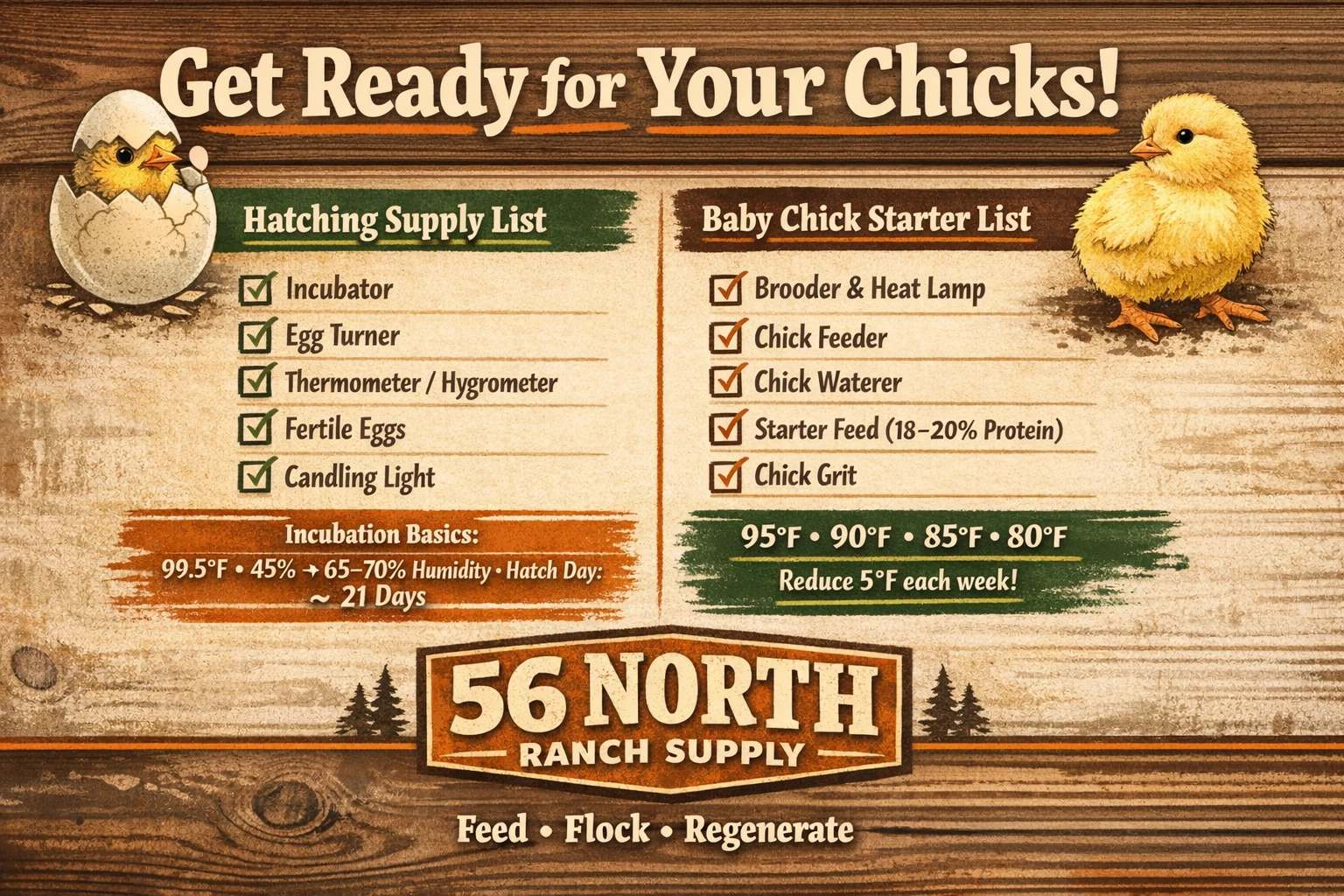
Before chicks hatch or come home, it’s important to have a brooder ready to go. A brooder is simply a safe, warm environment where chicks can grow during their first few weeks of life.
A basic chick setup includes:
Brooder Container
This can be a stock tank, plastic tote, wooden box, or livestock trough. The key is giving chicks enough space to move around and escape the heat if needed. Miller has an excelent option for a starter brooder set up here.
Heat Source
Young chicks cannot regulate their body temperature yet. A heat lamp or brooder plate keeps them warm. Start the brooder temperature around 95°F (35°C) and lower it by about 5°F each week as the chicks grow and feather out. Check out Brinsea's Brooder Plates. 56 North carries a wire variety of options here.
Bedding
Pine shavings are the most common bedding choice because they absorb moisture well and keep the brooder clean. Avoid cedar bedding, which can cause respiratory issues.
Feeders and Waterers
Small chick feeders and waterers help prevent spills and keep bedding out of the feed. Properly sized equipment also helps chicks easily access food and water from day one.
Thermometer
A simple thermometer in the brooder helps you monitor temperatures and adjust heat as needed.
Chick behaviour is often the best guide. If they pile under the heat source, they’re cold. If they stay far away, they’re too warm. When they’re comfortable, they’ll spread out evenly and move around actively.
Incubating and Hatching Your Own Eggs
Many homesteaders love the experience of hatching their own chicks. It’s an incredible process to watch and a great way to grow your flock.
A reliable incubator makes all the difference. Brinsea incubators are widely trusted by backyard chicken keepers and small farms because they maintain very stable temperatures and humidity levels. Many models also include automatic egg turning and digital controls that make incubation much easier, especially for beginners. Check out our full selection here.
To hatch chicken eggs successfully:
Set the incubator temperature to 99.5°F-100°F (37.5-38°C) in a forced-air incubator.
Maintain humidity around 45–50% for the first 18 days.
Eggs should be turned several times daily (or use an automatic turner).
On day 18, stop turning the eggs and increase humidity to 65–70%. This stage is called lockdown.
Chicks typically begin hatching around day 21.
~Check out this great Brinsea Maxi 24. Incubator Review here
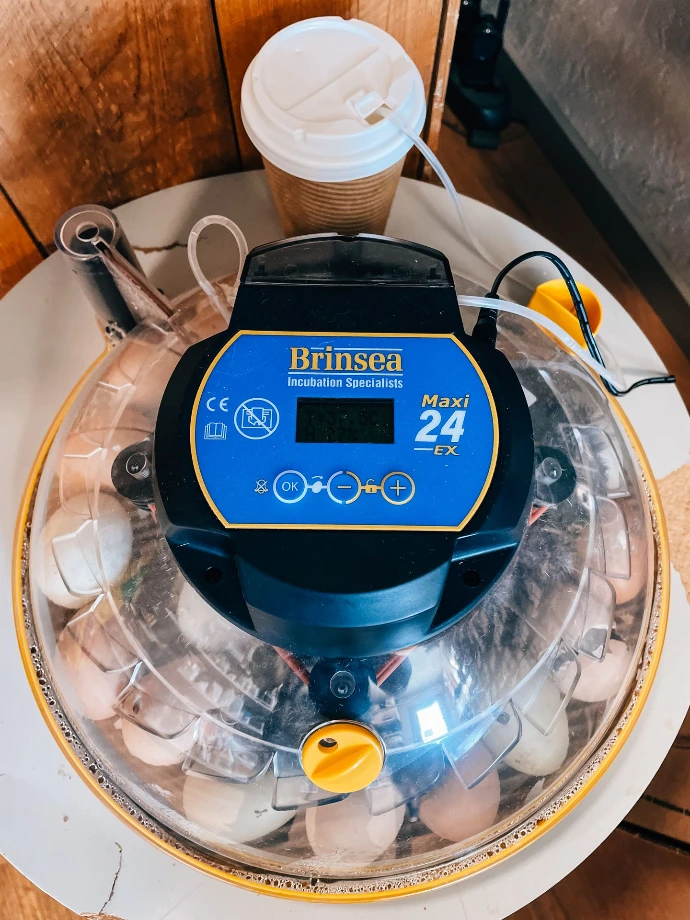
Patience is key during hatch time. Opening the incubator too often can drop humidity and make it harder for chicks to emerge safely.
The First Days: Feed, Water, and Grit
Once chicks hatch or arrive home, they should go straight into the warm brooder with access to fresh water and feed.
Starter Feed
Chicks grow quickly and need a high-protein diet during their early weeks. A quality chick starter feed containing 18–20% protein supports strong growth, feather development, and overall health. Check out or local milled (mash) Peifer Feeds Chick Starter, Country Junction Starter Crumble, Country Junction Chick Starter with Amprol or Peifer Feeds Chick Starter with MON.
Medicated vs. Unmedicated Feeds
In chick starter feed, the “medicated” label almost always refers to additives that help prevent Coccidiosis, a common intestinal parasite that affects young chicks when they are exposed to droppings and soil. The two medications most often discussed in poultry feeds are amprolium and ionophore medications such as monensin (sometimes abbreviated as “MON”).
Amprolium is by far the most common medication used in chick starter feeds in North America. It works by blocking thiamine (vitamin B1) uptake in the coccidia parasite, which prevents the parasite from multiplying. At the low levels used in starter feed, it helps chicks slowly build natural immunity while reducing the risk of a severe infection. It is widely used because it is considered safe, does not create antibiotic resistance concerns, and is suitable for backyard flocks.
Monensin (MON) belongs to a class of medications called ionophores. It is more commonly used in larger commercial poultry operations and livestock feeds rather than backyard chick starters. Ionophores work by disrupting the parasite’s cellular balance, preventing it from surviving in the bird’s intestines. While effective, monensin can be toxic if misused and is generally less common in feeds marketed for small flocks.
For most backyard and homestead poultry keepers, amprolium-medicated chick starter is the standard option, offering protection during the vulnerable early weeks. Unmedicated starter, on the other hand, is often chosen if chicks are raised in very clean brooders, if the flock has been vaccinated for coccidiosis at the hatchery, or if the keeper prefers to manage exposure naturally.
In practice, the choice usually comes down to your environment: chicks raised on soil or in larger groups often benefit from medicated feed, while very small backyard broods in clean brooders may do well on unmedicated starter.
Water
Fresh water should always be available. Many people place small stones or marbles in the waterer for the first few days to prevent chicks from accidentally falling in.
Grit
Because chicks don’t have teeth, they rely on grit in their gizzard to grind and break down food; without it, feed and treats can move poorly through the digestive system and may lead to blockages or constipation. Grit will give those chicks the best start to a health digestive system. Target's #1 Grit is the right size for starting those chicks.
Keeping feed fresh and bedding clean goes a long way in preventing health problems and encouraging steady growth.
When to Switch to Feeds
Chicks grow quickly during their first few weeks, and their nutritional needs change as they mature.
Around 6–8 weeks of age, most flocks transition from starter feed to developer feed (hens or breeding flocks) or broiler grower (meat flocks).
At this stage, chicks are:
Larger and more active
Nearly fully feathered
Better able to regulate their body temperature
Laying Breeds:
Developer feed is typically around 16% protein and is designed for growing laying hens, supporting steady growth and proper body development without pushing birds to grow too quickly before they reach laying age. Peifer Feeds 16% Grower/Developer is a great choice for this stage.
Laying hens are typically switched from developer feed to layer feed at around 16–18 weeks of age, or when they are close to starting to lay eggs. Layer feed contains added calcium to support strong eggshell development, which young birds do not need until they reach laying age.
Broiler/Meat Birds:
Broiler grower feed is usually around 20% protein and is formulated for meat birds that are bred to grow rapidly, providing the extra protein and energy needed to support faster muscle development and weight gain. Peifer Feeds 20% Broiler Grower or Pefier Feeds 19% Soy-Free Broiler Grower give you lots of options for your flock.
For meat birds, the final stage of feeding is called the finisher phase. In the last 1–3 weeks before processing, birds are typically switched to a finisher feed that has slightly lower protein and higher energy, helping them put on their final weight efficiently. Finisher feeds are also commonly non-medicated, ensuring birds are clear of medications before harvest. Peifer Feeds 18% Finisher is the perfect finish for your birds.
Raising Chicks in the North
Here in Northern Alberta, chick season often starts while winter still has a grip on the land. That means warm brooders, reliable equipment, and good feed are especially important for getting birds off to a strong start.
With a solid brooder setup, quality starter feed, and dependable equipment raising chicks can be an incredibly rewarding part of the homestead journey.
If you’re getting ready for chick season, we’re always happy to help you get set up with the supplies you need—from incubators and chick feeders to grit, starter feed, and everything in between.
Because at 56 North Ranch Supply, we believe in helping our community learn, grow, and regenerate—one flock at a time. 🐥🌱
Download and save this image for future reference!